

A Phase I Environmental Site Assessment (ESA) helps to evaluate the environmental risks involved when it comes to commercial properties. Whether you’re applying for financing, meeting CERCLA’s “innocent landowner defense,” or looking to limit liability, a Phase I ESA is a smart step toward protecting your investment and staying compliant.
To help guide you through the process, AEI has developed a comprehensive Phase I ESA checklist. This tool outlines key elements such as historical site use, regulatory database reviews, site inspections, and interviews with property stakeholders. Following a checklist ensures no critical detail is overlooked and keeps your assessment thorough, consistent, and aligned with ASTM E1527-21 standards.
No matter the reason for your assessment, having the right tools — and the right team — can make all the difference.
Phase I ESA Checklist Overview
Complete a Records Review that includes:
- Standard Federal, State, and Tribal Environmental Record Sources
- Regulatory Agency File and Records Review
- Land Titles
- Maps and Geological Surveys
- Historical Use
Perform a Site Visit to Evaluate
- Visual Inspection of Buildings’ Interior and Exterior
- Current and Past Business Use
- Adjoining Properties
- Hazardous Substances and Petroleum Products
- Tanks and Storage Containers
- Stains and Drainage Systems
- Bodies of Water and Vegetation
Conduct Interviews with:
- Past and Present Owners and Operators of the Property
- Key Site Manager
- Occupants
- State and/or Local Government and Agency Officials
Write an Evaluation & Report
- Description of Assessed Property
- Client Relationship to Property
- Scope of Services
- Summary of Information Gathered
- Data gaps (if applicable)
- Findings, Conclusions and Recommendations
- Supporting Documentation and References
- Qualifications of Assessor and Signature
What is a Phase I ESA?
A Phase I Environmental Site Assessment, or Phase I ESA, consists of a detailed report that researches and assesses the current and historical environmental uses of a property during a commercial real estate transaction. As an integral part of the environmental due diligence and decision-making process, it is ordered by stakeholders to mitigate risk regarding potential or existing environmental contamination at, or affecting, a property.
Who Performs the Phase I ESA Checklist?
An environmental professional must conduct the assessment on the client or user’s behalf. AEI’s Phase I ESA meets the most current ASTM Standard and can be customized to meet your unique needs. Our team of experienced and reliable professionals provide high quality reports for any site location or asset type.
Using the checklist ensures that you comply with the CERCLA All Appropriate Inquiry (AAI) rule, the minimum requirements necessary to qualify for landowner liability protections (LLPs). It also documents your specialized knowledge and experience with the property, which can then be used by courts to determine liability.
Download Our Phase I ESA Checklist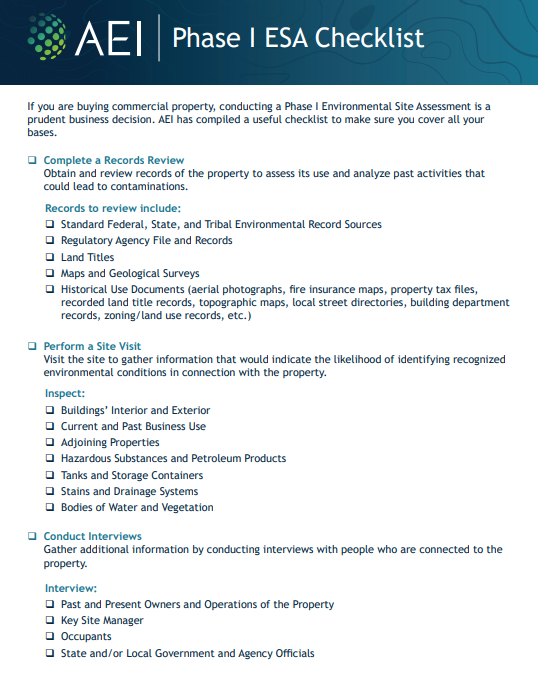
Components of a Phase I ESA Checklist
A Phase I Environmental Site Assessment Checklist includes four main components with multiple pieces of information to be gathered for each one.
1. Complete a Records Review
A records review involves obtaining and reviewing records in an extensive background search of the property to assess its use and analyze past activities that could lead to contaminations. Records may include:
- Standard Federal, State, and Tribal Environmental Record Sources: This includes any past ESAs as well as site and municipal plans to determine locations with maximum potential of contamination such as hazardous waste sites, disposal sites and cleanup sites. Reviewing these records helps identify known environmental concerns in the area that could pose a risk to the subject property.
- Regulatory Agency File and Records Review: If the property or adjoining properties are identified on one or more standard environmental record sources, regulatory records associated with the property should be reviewed to determine if a concern exists. These records can provide insight into the status of reported incidents, compliance history and whether any unresolved environmental issues remain.
- Land Titles: This includes a list of all previous business owners in the correct order, which gives the assessor a better understanding of past activities on the site. Knowing the chain of ownership helps trace historical operations that may have contributed to environmental impacts.
- Maps and Geological Surveys: These physical setting sources provide information about the geologic, hydrogeologic, hydrologic, or topographic characteristics of the site. Such information can reveal how contaminants might migrate through soil or groundwater and impact nearby properties or resources.
- Historical Use: Identify the property’s previous uses through means such as aerial photographs, fire insurance maps, property tax files, recorded land title records, topographic maps, local street directories, building department records, zoning/land use records.
How a Records Review Impacts Closing Time, Valuation, and Other Requirements
Findings in a records review can influence the transaction timeline, causing delays if more information is needed. Environmental concerns can also affect the property’s market value and impact financing options, as lenders often require clear environmental assessments to approve loans. Starting the review early ensures timely compliance with regulations and smooths the path toward closing by highlighting any possible issues upfront.
What Happens if Issues Are Found During Record Reviews
If the records review uncovers potential environmental concerns and recognized environmental conditions (RECs), these findings will be documented, the associated risks will be outlined, and further evaluations may be recommended. These findings can impact negotiations, with buyers requesting price reductions, remediation commitments, or legal protections. Lenders and insurers may also reassess their risk exposure, potentially affecting loan terms or insurance premiums. In some cases, the buyer may choose not to proceed with the transaction if the identified risks are too significant or costly to address.
Worried about what a Phase I might uncover? Let our experts walk you through it.
2. Perform a Site Visit
After reviewing records to better understand where to focus, a site visit is the next step. The objective of a site visit is to gather information that would indicate the likelihood of identifying recognized environmental conditions in connection with the property. This includes:
- Visual Inspection of Buildings’ Interior and Exterior: If a building exists on the property, both the interior and exterior are observed. This inspection can uncover signs of hazardous materials use, structural deterioration or other environmental red flags.
- Current and Past Business Use: Determine the operations and use of the current property as well as look for effects from past property uses and disposal of hazardous materials. Understanding historical and current uses can help identify potential sources of contamination that may still affect the site.
- Adjoining Properties: Make exterior visual observations of any adjoining properties and, if possible, inspect the interior with permission of the respective owner. These observations may reveal off-site environmental concerns, such as chemical use or storage, that could impact the subject property.
- Hazardous Substances and Petroleum Products: List any hazardous materials and substances that both can and cannot be identified, detailing quantity, disposal methods and storage conditions. Documenting these substances helps assess environmental liability and the potential for soil or groundwater contamination.
- Tanks and Storage Containers: Identify all tanks both currently in use or decommissioned, including both underground and above ground as well as the size, year built, contents and location. Locating and characterizing storage tanks provides insight into possible leakage risks and compliance with environmental regulations.
- Stains and Drainage Systems: Make note of any stains located inside the property, such as on walls, ceilings or floors, as well as stains outside the property, such as in the parking lot. Stains and poor drainage may indicate previous spills, leaks or disposal issues that warrant further investigation.
- Bodies of Water and Vegetation: Examine any pits, ponds or lagoons for contamination and evaluate local vegetation for signs of environmental stress caused by contamination. Changes in vegetation or surface water quality can be signs of pollutant migration or environmental degradation.
How a Site Visit Impacts Closing Time, Valuation, and Other Requirements
Site visit findings can influence the closing timeline and property value by revealing environmental concerns that may require further investigation or cleanup. Discovering issues like leaking tanks or hazardous materials can delay closing and prompt lenders to adjust financing terms or require additional protections. Early detection during the site visit helps buyers and sellers plan accordingly, reducing surprises and keeping the transaction on track.
What Happens If Issues Are Found During Site Visits
If the site visit reveals potential RECs and environmental problems, additional steps are usually required. This often involves a Phase II Environmental Site Assessment to collect soil or groundwater samples and confirm contamination. Depending on the results, remediation or cleanup may be necessary before the property can be sold or developed. These issues can lead to renegotiation of sale terms, changes in financing, or delays in closing until the environmental concerns are resolved. Addressing these problems early helps protect buyers and lenders from future liabilities and ensures the transaction complies with legal and regulatory standards.
Concerned about RECs that may appear? Our team can help you plan the next steps.
3. Conduct Interviews
Additional information is gained by conducting interviews with people who are connected to the property. This includes:
- Past and Present Owners and Operators of the Property: Individuals who are closely associated with the property should be able to provide important information about its uses and conditions. Their firsthand knowledge can help identify past operations, environmental incidents, or changes that may not be documented elsewhere.
- Key Site Manager: This is typically the property manager, chief physical plant supervisor, head of maintenance or owner. Any of these people will have good knowledge of the uses and physical characteristics of the property. Speaking with them often uncovers details about material handling, maintenance practices and past repairs that may relate to environmental concerns.
- Occupants: This includes anyone who is currently occupying the property or has occupied it in the past. Current and former occupants can provide insight into day-to-day activities, chemical usage and any issues they may have observed during their time on-site.
- State and/or Local Government and Agency Officials: Gather information from agencies such as the local fire department, state or local health agency, local agencies responsible for hazardous wastes, and local agencies responsible for building permits or groundwater permits. These sources may hold key records or anecdotal knowledge of spills, violations or past remediation efforts involving the property or nearby sites.
How Interviews Impact Closing Time, Valuation, and Other Requirements
Interview responses can reveal RECs and environmental concerns not captured in records or visible on site. These details may prompt further scrutiny from buyers, lenders, or insurers, potentially slowing the closing process or affecting property valuation. Missing or incomplete interviews can also create data gaps in the Phase I ESA, limiting its reliability. Thorough, timely interviews help ensure the assessment is complete, which supports smoother financing, negotiation and decision-making.
What Happens If Issues Are Found During Interviews
If interviews uncover potential RECs, such as past contamination or concerns about tanks or hazardous materials, those findings are documented in the Phase I ESA report. These issues may lead to a recommendation for further investigation, typically through a Phase II ESA. Depending on the risk, buyers might renegotiate terms, request cleanup, or consult legal counsel regarding liability. Interview disclosures can significantly shape the transaction, especially when they reveal environmental risks not found elsewhere.
Uncovering RECs? We’ll help you understand what they mean and what to do next.
4. Write an Evaluation and Report
The final step to the Phase I Environmental Site Assessment Checklist is to deliver the findings and insights, along with any conclusions and recommendations that can be made from the information gathered. Information in the report should include:
- Description of Assessed Property: Describe the details of the property, including its location, size and owners. This establishes the basic context of the assessment and ensures clarity about the subject site throughout the report.
- Client Relationship: The relationship between the client and assessor must be summarized during reporting. Clarifying this relationship helps maintain transparency and discloses any potential conflicts of interest.
- Scope of Services: Include a description of all the services that were performed in sufficient detail so that another party would be able to reconstruct the work. A clear scope ensures the report is reproducible, auditable and aligns with ASTM or any other regulatory standards.
- Summary of Information Gathered: All information that is discovered (including no findings) as well as insight gained from the records review, site visit, and interviews should be summarized in an organized format.This section consolidates key findings and allows the client to easily interpret the results of the assessment.
- Data gaps (if applicable): Identify and comment on significant data gaps that affect the ability of the assessor to identify any recognized environmental conditions. Include the sources of information that were consulted to address the data gaps. Noting these gaps helps define limitations of the report and indicates where further investigation may be necessary.
- Findings, Conclusions and Recommendations: Summarize all findings and conclusions based on the information gathered and the professional opinion of the assessor. Then, make recommendations for next steps for the client. This provides a clear, actionable summary of the environmental risks and outlines any further due diligence or remediation steps.
- Supporting Documentation and References: All documents and references leading to the conclusion must be attached to the report in an appendix. Including this material supports the credibility of the findings and enables third-party verification if needed.
- Qualifications of Assessor and Signatures: The assessor must sign the original document to verify their conclusions are valid based on their appropriate qualifications. This certifies that the work was performed by a qualified professional and meets industry standards for due diligence.
From risk review to resolution, we’re here to help you move forward with confidence. Reach out to speak to one of our experts today.
Who Performs the Phase I ESA Checklist?
An environmental professional must conduct the assessment on the client or user’s behalf. AEI’s Phase I ESA meets the most current ASTM Standard and can be customized to meet your unique needs. Our team of experienced and reliable professionals provide high quality reports for any site location or asset type.
Using the checklist ensures that you comply with the CERCLA All Appropriate Inquiry (AAI) rule, the minimum requirements necessary to qualify for landowner liability protections (LLPs). It also documents your specialized knowledge and experience with the property, which can then be used by courts to determine liability.
What CRE Owners Need to Know in 2025
In 2025, several emerging trends and regulatory shifts are shaping the way commercial real estate owners approach environmental due diligence, particularly during Phase I ESAs. Understanding these developments can help prevent delays, reduce risk, and keep deals moving forward.
PFAS Are a Central Concern
The EPA’s rule designating two PFOA and PFOS substances as hazardous substances took effect in April 2024, marking a significant shift in environmental liability for property owners. If that rule is reversed, it could have significant implications. There are legal challenges to the rule, but so far, no formal announcements have been made of any action being taken. If any decisions of reversal are made, those reversals will take time. So, the industry will be made aware well in advance.
While PFAS-related RECs don’t always kill a deal, they’re causing more scrutiny among lenders — about a third of transactions involving PFAS concerns result in financing challenges. Still, most of the time, these risks can be resolved. The key takeaway: PFAS shouldn’t be a deal breaker, but CRE owners should be prepared to address them proactively.
AI in Phase I ESAs: Potential and Pitfalls
AI is increasingly being used to streamline data collection, document review, and report writing in Phase I ESAs, but it remains a double-edged sword. When used responsibly, AI can improve efficiency and even enhance report quality. However, it cannot replace the judgment of a qualified environmental professional.
AI tools have been known to misinterpret handwritten documents or produce convincing yet technically inaccurate findings. In response, upcoming revisions to ASTM E1527 are expected to include guidance on the appropriate and transparent use of AI, emphasizing that final determinations must always be reviewed and validated by an environmental professional.
State and Regional Regulations to Watch
While national regulatory shifts get most of the headlines, regional updates are equally important. For example, the Connecticut Transfer Act is scheduled to sunset March 1, 2026. Also, various states have banned chemicals like TCE and PCE. The EPA also banned them last year. If the EPA rules get overturned, states may be required to follow suit. Staying informed about local environmental rules is essential to avoid compliance issues during property transactions.
What’s Ahead for ASTM Standards
No immediate changes to the ASTM E1527-21 standard are expected in 2025, but the process to revise it will begin soon in order to meet the 2029 renewal deadline. Topics under review for the Phase I ESA specifically, include clarification of CRECs and de minimis conditions, continued viability guidance, and, critically, the role of AI in ESAs. AEI is actively engaged in shaping these updates and remains ahead of the curve, with several team members directly participating in the ASTM process. (So send us your comments and concerns!)
How AEI Can Help
Using a detailed Phase I ESA checklist ensures no critical step is overlooked during due diligence, helping you identify environmental risks early and avoid costly surprises down the line. AEI Consultants brings over 30 years of experience guiding clients through the environmental assessment process with clarity and confidence. Our nationwide team of experts understands the nuances of regulatory compliance, commercial real estate development and environmental risk management. Whether you’re navigating RECs or preparing for redevelopment, we’re here to help. Contact us today to get expert insight, practical solutions, and peace of mind for your next project.
From evolving regulations to emerging risks, AEI helps you navigate every phase of your environmental due diligence. Get in touch with our team today.